Showing posts with label surface. Show all posts

Monday, 4 March 2013

Red cross - emergency stitching!

Red cross - emergency stitching!:


I have a few additions to make to 'Visible Mending'. Some things became apparent only when I had 'finished' the piece and was able to step back and take stock. I have to hang the work later this week so I am really up against my deadline now.

Patches

Patches:


Little digital print silk patches, appliqued onto 'Visible Mending'. I feel the contrast of textures works well with these but still think there is work to be done. However time is evaporating fast; decisions and stitches need to speed up.

Interiors | Lake August

Interiors | Lake August:
interiors pattern people lakeaugust 2 Interiors | Lake August
interiors pattern people lakeaugust 3 Interiors | Lake August
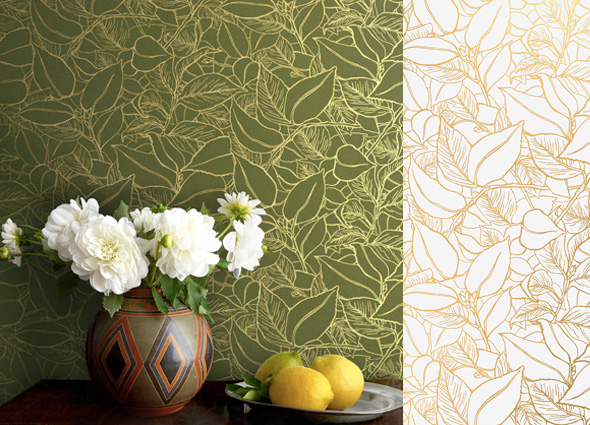
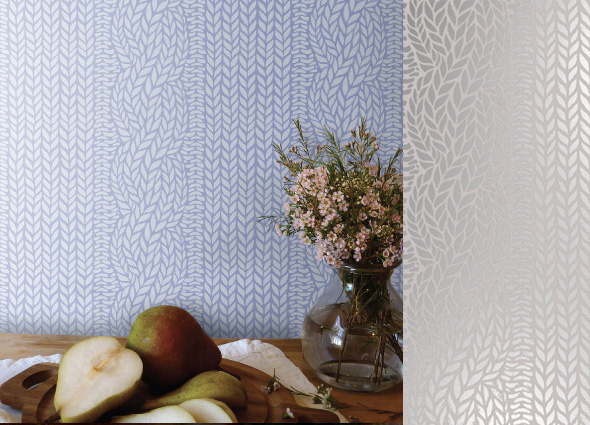
Inspired by the landscape and craft heritage of Scotland, the debut collection of wall coverings from LA based designer and former Pattern People contributor, Alexis Hartman, captures the beauty of this locale through hand-drawn illustrations and hand-printed applications. Lake August wallpapers are printed in the States using water-based inks and you can feel good about your purchase as a portion of each sale helps support sustainable agriculture through the Land Stewardship Project.
– Jessie Whipple Vickery

wall coverings by Lake August

Brook&Lyn

Brook&Lyn:
Amy and I have been obsessing about woven wall hangings for a while now. She’s been bookmarking great vintage options on Etsy, and I’ve been slowly stalking all my favorite contemporary designers. I picked up a great wall hanging by Nightwood during their One Kings Lane sale, but I’ve been eying a few more to add to my collection. At the top of my list are these jaw-dropping designs by Brook&Lyn’s Mimi Jung. I first saw Mimi’s designs at Of a Kind (you can listen to their After the Jump interview here), but her latest designs are breathtaking. Each of her incredibly lush wall hangings are made with a mix of yarn, copper and natural materials like palm tree bark. The colorful pieces above and below (check out that eye design — swoon) are my favorites, but you can view her full collection online right here. If I happen to stumble upon a stack of one hundred dollar bills any time soon, I’m going to make one of these mine. The texture makes me weak in the knees. xo, grace


brookandlyn_mimi_jung_weaving_3 3_DesignSponge_brookandlyn_mimi_jung_weaving_11 4_DesignSponge_brookandlyn_mimi_jung_weaving_11 2_DesignSponge_BrookandLyn 1_DesignSponge_brookandlyn_mimi_jung_weaving_11
More images after the jump . . .
(more…)


The Cutting (& Stitching) Edge – Debbie Smyth

The Cutting (& Stitching) Edge – Debbie Smyth:

Debbie Smyth is a visual artist from Cheltenham, England, who specialises in pin and thread art.
Debbie Smyth - Fly Away Home - pin and thread work
“Everyday we see strong linear structures, architectural forms, iconic objects; I like to capture these but play with the angles and perspective to give extra depth to my drawing.
Debbie Smyth - Left Luggage - pin and thread work
“The drawings are firstly plotted to give me the bare bones of the image. I then gradually exaggerate and add more thread and knots, just like you would add shading with a pencil. Thread, such a pliable and soft material with great line quality.
Debbie Smyth - Home Sweet Home - pin and thread work
“Shadows and light play with the semi translucent cutouts creating extra depth and giving the piece life. Sometimes extending the wandering lines creating quirky interruptions within the framing, which give a sense of theatre and presence that can’t be captured by images alone.”
Debbie Smyth - Love Alphablox - pin and thread work
I’ve had the pleasure of getting to know Debbie over the past year and she’s a great person as well as being a terrific artist. Much of the pleasure with her work comes from watching the process and seeing the images appear as she weaves her threads. This video illustrates the point and is worth a look.
Debbie takes a concept that is familiar to most of us, and creates charming works that have a simple elegance and are full of charm. It’s a process we could all try, but Debbie’s work sets a high standard – she is an artist of great vision. Visit her website to enjoy more of her amazing pieces.
—–
The Cutting & Stitching Edge is brought to you in association with PUSH: Stitchery, the must-have embroidered art book by Mr X Stitch !
All Mapped Out:
>> Isabelle OC beat me to her mapped out post but the origin is the same.  My faithful Acne scarf printed with an old map of Stockholm on it has served me well in the printed map front.  The fresh influx of printed map activity from Carven's resort collection has been tempting enough but when paired with captivating birds of flight made out of maps or pleated map dresses seen at The First Cut paper art exhibition, it only exacerbates the need to get some new mapped out garments in my life.
Claire Brewster's intricately cut-out vintage map birds made me wish I was the sort of person that put away money for a rainy day to buy an extravagant piece of art.  Brewster creates movement and breathes life into old maps and atlases with incisions, mimicking birds in flight, swarms of insects or tropical plants.  They're often installed standing away from the wall or foundation board so that they cast complicated shadows that make the cut-outs look like they're fluttering about on the walls.  I've got my eye on any one of the London map pieces by Brewster to start my spiralling downfall towards being one of those people who say "Oh, I'm a collector..."

IMG_9820
IMG_9821


Carven is no stranger to maps printed on garments.  Guillaume Henry's girl has always tended to be a bookish creature, travelling in her head by flipping through atlases.  Last summer she was skipping around a bright chartreuse-tinged map of Maine.  This time round, she's closer to her home turf, bounding about an old engraving of Paris.  Now's the time to say cheesy French phrases like "Ooohhh...trés jolie!"  There's no way you can't feel that old cartography printed on to cute blazers, A-line skirts and blouses is anything but jolly/jolie.  The temptation would be to buy the whole lot and skip around the streets of you guessed it, Pareeeee...
Carvenmap


Carven printed jacket, skirt and wedges from Matches Fashion, Carven printed dress and shirt from Net a Porter.  
Elisabeth Lecourt is perhaps the most common answer on Google if you search for "map dress".  Her famous series "Les robes géographiques" reach almost iconic levels, when it comes to being blogged and reblogged, so much so that I suspect some people are looking at these flat pleated dresses and wondering whether they're actual wearable garments.  It would be criminal to leave Lecourt out in an exhibition about artists who cut, sculpt and manipulate paper.
IMG_9829


Christopher Raeburn made some incredible new strides in his Deploy/Flight S/S 13 collection.  The signature lightweight macs and nylon outerwear is injected with femininity seen in the trapped lace parkas and a delicate looking ripstock lace looking like a camouflage pattern.  The most impressive part of the collection though was the "Remade" element, which is always present in Raeburn's design ethos.  Raeburn came across a cache of old 1950s military escape maps that were printed on lightweight silk so that they wouldn't get destroyed in the rain.  Raeburn didn't even have to transfer any print to a wearable fabric as they were already printed out for him, ready to make playsuits, bomber jackets and dresses.  Up close, it's fascinating to make out the physical geography on the maps but from afar, it's a beautiful print that looks anything but upcycled or reused.  


IMG_7491


This 1970s vintage Chloe dress has been hanging around the Merchant Archive website for a while.  What with their starry clientale these days with fans such as Florence "and the Machines" Welch, it's surprising that there's anything left to be honest.  I might falter and give in to this dress anytime soon though if nobody shares my love of this abstracted colourful globe pattern.


Chris Kenny's piece Capella is based on a galaxy formation of found map pieces.  For him it's "a fetishistic accumulation of data" - an observation of human presence in a world divided up by unnatural territorial borders.
IMG_9837
IMG_9839
Finally, trusty Etsy (which has somehow become more interesting than eBay in terms of unique pieces...) has a mapped out specimen, printed with the highway routes of USA and set into a diagonal window pane shift dress.

Featured Designer: Marta Spendowska

Featured Designer: Marta Spendowska:

Happy Friday pattern lovers! Today I am featuring the wonderful work of Marta Spendowska. Marta is from Poland, but is now based in the ol’ USA where she works as an illustrator, surface pattern designer and web designer. “Today I think in repeats, watercolors and HTML. Pattern and motif creation happens a second after I close my eyes. Coding for me is like discovering the perfect shade of turquoise. It’s all the same joy.”
Marta has been successfully selling her illustration (mainly portrait and perfume illustration) artwork on FAB.com, she’s been licensed with Deny Designs and the new European venue YouArtMe. She hopes to work in fashion illustration more and more. To see more of Marta’s work please visit her website.
I hope that you had a wonderful week filled with the work that you love. We are busy over here gearing up for the Sellable Sketch Workshop, working on repeats with the fantastic designers who registered for the UGTR workshop and creating prints for a number of Summer & Fall ’14 collections. It is a whirlwind!
Have a great weekend!!!

In The Beginning

In The Beginning:
Musuk Nolte for HAND/EYE
The beauty of Peru’s Pre-Columbian cultures
Peruvian textile production began more than 10,000 years ago as evidenced by artefacts recovered in the Guitarrero Cave of the Ancash region. The first inhabitants of the Andean region developed a vast and exquisite textile tradition to provide for personal warmth, as well as to pay tribute to their rulers and pay homage to their deities. Depending on its intended use, each piece was elaborated with a number of techniques, and the backstrap loom was exploited to its fullest, to create works of great aesthetic beauty. The refined tastes of both artisans and users can be discovered in these textiles.
The geography of Peru has effected the development of various cultures, each evolving its own level of organization, some of which were sufficiently complex to allow some of its members to specialize as craftsmen. To satisfy the needs of their respective societies, sophisticated textile techniques were developed in single-culture and pan-Andean contexts. The raw materials most utilized were native cotton (Gossypium barbadense L) produced in as many as eleven colors (cream, black, red, green, blue, grey, violet, beige, brown and their variants), fibers of Andean camelids with vicuña being the finest, and fibers extracted from various members of the agave family such as cabuya or maguey plants.
Peru’s first civilization was formed between 3000 and 2500 B.C. in the Supe Valle, with several communities established as urban centers which played a fundamental role in the distinct cultures that eventually emerged. Of some relevance is the recent discovery of a quipu, or group of knotted cords, used as a recording device by Peruvians some 5,000 years ago.
Many textile splendors were manifested in different eras and regions throughout history. The Chavin Culture (900 B.C. - 200 BCE) of the high Andean region produced cotton textiles illustrated with intricate personages which were also reproduced in stone sculptures. The colors of Chavin textiles bear some resemblance to sepia photos of the last century.

The Paracas Culture (700 B.C. - 200 BCE) demonstrated a command of dyeing techniques resulting in at least 79 different tonalities attained using by-products of various Andean plants and animals as dyestuffs. Robes have been discovered in grave goods which have maintained their original color, demonstrating (particularly in the embroideries of ancient Paracas) a still-unmatched chromatic richness. The symbolic language of these goods is rich with strange mythical creatures.
The Moche Culture (100 BCE - 700 CE) evolved on the northern coast, and its abundance of ceramic, metal and textile production is astounding. Feathers and small metal objects were incorporated into their clothing, resulting in original textures as well as a certain musical aspect.
The Tiahuanaco (200 ACE - 1000 CE) and Wari (500 CE -1000 CE), cultures of the high Andean plains and Ayacucho, respectively, are distinguished by the designs obtained through techniques similar to woven kilims. According to the research of Alan Sawyer, the Wari began with a traditional and conventional style inspired by Tiahuanaco textiles, but then moved on to incorporate geometric icons. Wari designs allowed a distortion of the icons to adapt them for use on fabric bands, eventually leading to increasing abstraction and colorplay. Wari textile design might be considered the most modern, with considerable bravura in spinning and weaving. The extraordinary quality of Wari fabrics is evidenced by a fragment with an unmatched density of 398 hand-spun threads per inch.
Textile production in the Chancay Culture (1100 CE - 1450 CE) surprises us with its diversity of backstrap loom techniques. Chancay weavers created a catalog of methods and designs to allow their customers to order goods to suit their personal tastes. Chancay weavers developed techniques which were applied to the production of various pieces: gauze, nettings, and flat-woven cotton cloths tie-dyed and assembled as patchwork. Some of the work is strikingly modern: the simplicity of repeated geometric patterns on a single piece coupled with bold color combinations have resulted in Chancay textiles being recognized as a source of inspiration for contemporary designers.

Incan textiles eventually dominated many of Peru’s regions. The elite enjoyed the service of female weavers kept in seclusion – said to be beautiful virgins. Woolen blankets, rugs and hangings were made across the Incan Empire for the palaces and temples. Woolen tunics were adorned with gold, precious stones and feathers. It is said that an Incan never wore the same outfit twice, which further demonstrates the importance that textiles held in the lives of Andean men and women.
Today, textiles continue to carry great importance in Andean life. From an early age, men and women learn to spin cotton, sheep’s wool and the lustrous fibers of Andean camelids. Though they’ve incorporated the use of the European pedal loom and have altered their designs in accordance with the diverse influences of colonialism and globalization, their distinct character has been maintained. One of the major additions to Andean textile customs has been the introduction of tailoring; previously, all the pieces were assembled from square or rectangle swatches taken directly from the loom.
It’s no coincidence that contemporary artisan clusters are found in the same areas where Pre-Columbian cultures developed. Regions with high rates of artisan production include Cajamarca, Ancash, Junín, Ayacucho, Puno and Cusco as well as in the northern coastal area now known as the Moche Route, which includes the provinces of La Libertad and Lambayeque. For present day Peruvians of these regions, globalization has presented an opportunity to contribute their talent and abilities to an ever-demanding and expanding economy. Deep and ancient cultural heritage is now an asset to be traded in the global marketplace.
Josefa Nolte is a Peruvian anthropologist who has worked in the craft development sector for 40 years. She is currently National Coordinator for the UN Joint Program for Inclusive Creative Industries in Peru.

Studio Visit: Malene B Carpets

Studio Visit: Malene B Carpets:

Some people are born with an innate sense of color and pattern. I’m not one of those people. But thank goodness designer Malene B is. She has been wowing me (and the rest of the design industry) with her bold carpet designs for years, and at this past year’s ICFF, I had to take a moment to look through every single sample to really appreciate how gorgeous they were. Drawing inspiration from her international travels, cultural icons, landscapes and her African Caribbean heritage, Malene is constantly creating patterns and color combinations that make you stop and look closer. Whether she’s designing a flat-weave or thick, tufted wool carpets, Malene also makes sure her work is as socially conscious as possible by supporting Goodweave and Aid to Artisans. Inspired not only by her design talent but also her commitment to the people behind her craft, Max and I decided to visit Malene’s beautiful home studio in Brooklyn’s Bedford–Stuyvesant neighborhood yesterday to get a closer look. Malene sat down with us to talk about all things design, and we had so much fun learning about color samples, her habit of designing patterns on the subway and all the places and people that inspire her. Thanks so much to Malene for welcoming us into her home. I hope you’ll enjoy her interview as much as I did! xo, grace
All photographs at Malene’s home by Maxwell Tielman

Image above: ARS color yarn samples (a fiber-specific system similar to Pantone), and Malene’s sketches for designs, made on the train ride home.
age above: Malene’s sun-filled kitchen is the perfect place to browse new samples.
DesignSponge_MaleneB2 DesignSponge_MaleneB3 DesignSponge_MaleneB4 DesignSponge_MaleneB5 DesignSponge_MaleneB6 DesignSponge_MaleneB7 DesignSponge_MaleneB8 554320_10150895098408412_247322687_n 525902_10150842169138412_1960274156_n 525504_10150700098078412_121822581_n 419934_10150596733873412_46087356_n chiapas batik flatweaves maleneb_1_1
The full interview and more photos continue after the jump . . .
(more…)